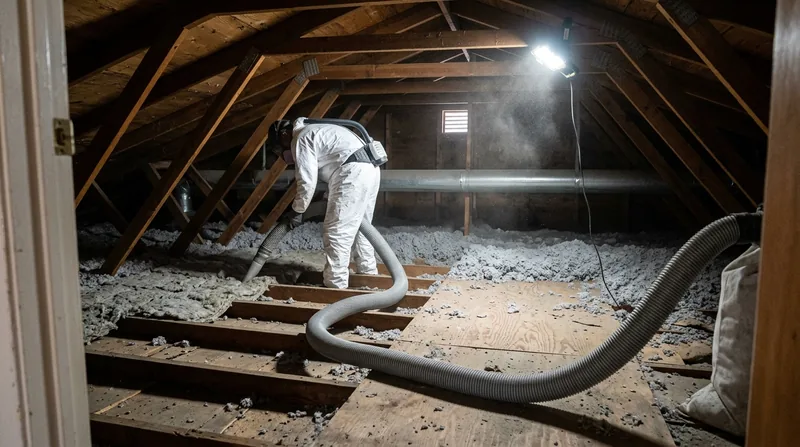




Insulation Removal in El Paso is the foundation of every retrofit job worth doing. In the high desert where summer attics hit 140 to 160 degrees Fahrenheit from May through September, old blown-in fiberglass and batts pack down, trap moisture from monsoon storms, and become breeding grounds for pack rats. Before any new spray foam or fresh insulation goes down, the failed material has to come out completely. We vacuum out the loose fiberglass and batts and clear the deck so new insulation performs at its rated R-value. That's the only way to fix an attic that's been failing you for years.
Why Insulation Removal Matters in the Desert: The El Paso Climate Factor
El Paso sits at nearly 4,000 feet in the Chihuahuan Desert where the thermal swing is brutal. Summer heat drives moisture up through old insulation; winter cold pulls it back down. Add the monsoon season from July through September, and you get saturation in materials that should stay dry. Old blown-in insulation compacts over time, especially in attics where it has been stepped on or disturbed. Fiberglass batts shift and leave gaps. When pack rats move in (and they do, every year), they nest in the insulation and leave behind contamination that makes the whole layer unusable. The only fix is complete removal.
- Compacted fiberglass loses R-value and traps heat in your attic instead of blocking it.
- Monsoon-soaked insulation becomes a moisture problem that spreads to framing and sheathing.
- Pack rat nests and droppings contaminate the material and create a health and odor issue.
- Settling and shifting leave cold spots and thermal leaks that your air conditioning cannot overcome.
- Removing it completely is the only way to install new foam or blown-in at the correct depth and density.
A homeowner in Kern Place or Sunset Heights with a 1920s brick bungalow often finds 4 to 6 inches of original cellulose or fiberglass sitting on the plaster ceiling, all of it matted and useless. The newer 1950s and 80s ranches on the Eastside have flat or low-slope roofs with almost no attic space and original fill that is flattened solid. In every case, that old material has to go before anything new can work.
Key info: Vermiculite insulation, found in many El Paso homes built before 1980, may contain asbestos. We flag it for testing by a licensed professional and do not disturb it. If your attic has loose, silvery, popcorn-like material, do not touch it and call us for an inspection.
For guidance on what the City of El Paso requires before you hire any contractor to work in your attic, see the City of El Paso Building and Planning Department.
How We Remove Insulation: Step by Step in El Paso Homes
The process is straightforward but requires equipment and care. We bring in a commercial-grade vacuum truck with a sealed hose system so no dust escapes into your home. The crew enters the attic with mechanical ventilation running to clear the air during removal. Everything that is loose or batted comes out. If there is failed spray foam from a previous job, we cut and remove that too (most installers will not touch it). All debris is bagged and hauled away. The attic deck is swept clean so we can inspect the substrate before any new work begins. The whole job typically takes one day for a standard El Paso attic.
- We inspect the attic, identify what needs to come out, and flag any vermiculite or asbestos-suspect material for professional testing.
- We set up mechanical ventilation and seal the work area to contain dust and debris.
- We vacuum out all loose fiberglass, cellulose, or other blown-in material using a sealed hose system.
- We remove all batts, blankets, and any failed or deteriorated spray foam by hand and cutting.
- We sweep and inspect the deck, framing, and any ductwork or electrical runs before we leave.
- We haul all material off site and dispose of it properly according to local waste codes.
Once the attic is clean, you are ready for new attic spray foam insulation or blown-in replacement, depending on your needs and budget.
Local example: A homeowner in Horizon City with a 1990s two-story stucco home had 8 inches of settled fiberglass in the attic, plus pack rat nests in the insulation and ductwork. Removal took one full day. The deck was clean and dry, and we were able to install closed-cell foam the following week. The attic temperature dropped 15 degrees by mid-June.
Removal Methods and What Works Best
| Method | Description | Best For |
|---|---|---|
| Vacuum truck removal | Sealed hose system pulls loose fiberglass and cellulose into a collection tank. Dust stays contained. Mechanical ventilation runs during work. | All blown-in insulation, fiberglass batts, and cellulose in attics and crawl spaces. |
| Hand removal and cutting | Crew cuts and removes failed spray foam, dense batts, and material too wet or contaminated for the vacuum. | Failed spray foam jobs, pack rat nests, moisture-soaked material, and tight spaces. |
| Substrate inspection and flagging | After removal, we inspect framing, ductwork, and electrical for damage. Vermiculite is flagged for professional testing, never disturbed. | All jobs. Identifies what else needs repair before new insulation goes in. |
| Debris hauling and disposal | All material is bagged, sealed, and hauled to a licensed waste facility. No dumping on site or in the desert. | Complies with El Paso and Texas waste codes. Gives you a clean attic and a clear conscience. |
Insulation Removal Cost in El Paso: What to Expect
Removal cost depends on how much material is in your attic, how compacted or contaminated it is, and how easy access is. A straightforward attic with 4 to 6 inches of settled fiberglass and clear access starts at around $950 to $1,200. If there is failed spray foam to cut out, pack rat nests to deal with, or moisture damage to the substrate, the job moves up. A large two-story home with a sprawling attic and heavy insulation can run $1,500 to $2,200. The best way to know is to get us out for a free inspection and a written estimate with no obligation.
Several factors move the cost up or down. The size of the attic is the primary one. Access matters too: if the attic has a good pull-down stair and clear headroom, the crew works faster. If you have to cut an access hole or work in a cramped space, it takes longer. Contamination (pack rat nests, mold, or moisture damage) adds time. Failed spray foam that has to be cut out instead of vacuumed is also a separate cost. We include hauling and disposal in the price, so there are no surprises at the end.
For a detailed look at pricing across all our services, visit our full pricing page. Call us at (915) 213-7582 for a free estimate tailored to your home.
What to Look for When Hiring an Insulation Removal Contractor Near Me in El Paso
Not every contractor handles removal well. Some will quote you a price and show up with a shovel and garbage bags. Others will skip the vermiculite inspection or leave the attic in worse shape than they found it. Here is what to ask and verify before you sign anything. First, ask if they use a sealed vacuum system with mechanical ventilation. If they say they will hand-bag everything or use an open vacuum, keep looking. Second, ask if they inspect and flag vermiculite. If they say they will just pull it out or that it is not a concern, that is a red flag. Third, get a written estimate that shows what is included: removal, hauling, disposal, and the estimated time. Fourth, ask for references from El Paso homeowners, not just a phone number. Fifth, confirm that they carry full insurance and that you can call their carrier to verify coverage before work starts.
- Request a written estimate that lists what material is being removed and the total cost with no hidden fees.
- Ask how they handle vermiculite and confirm they will flag it for testing, not remove it.
- Verify that mechanical ventilation will run during the entire removal and that dust containment is in place.
- Check that they carry full insurance and ask to see a certificate of coverage before they start.
- Ask for at least two references from El Paso homeowners and call them about their experience.
- Confirm that the contractor is registered with the City of El Paso or the city where your home sits, if registration is required at your address.
If you are ready to move forward, contact us for a free inspection and estimate. We will walk you through the whole process and answer any questions about what comes next.
Insulation Removal in El Paso: Pricing Guide
| Service | Price | Details |
|---|---|---|
| Standard attic removal (4-6 inches, settled fiberglass) | Starting at $950 | Includes vacuum removal, hauling, disposal, and substrate inspection for a typical El Paso attic with good access |
| Large attic with heavy insulation or pack rat contamination | Starting at $1,500 | Larger square footage, extra time for contamination cleanup, and additional bags or hauling trips increase the base cost |
| Failed spray foam removal (cutting and hand removal) | Starting at $1,200 | Spray foam that has failed or deteriorated requires cutting and hand removal, which takes more time and equipment than vacuum removal |
| Complex jobs with moisture, framing damage, or tight access | On estimate | Wet substrate, structural damage, or severely restricted attic access requires an on-site inspection before we quote a firm price |
| Travel and setup | Included | No separate mileage fee or travel charge within El Paso and surrounding Greater El Paso service areas |
| Free estimate | No charge | Written estimate with no obligation, response within 24 hours at (915) 213-7582 |
Indicative pricing, the exact cost depends on square footage, finish, and site access. Free personalized estimate within 24h at (915) 213-7582.


