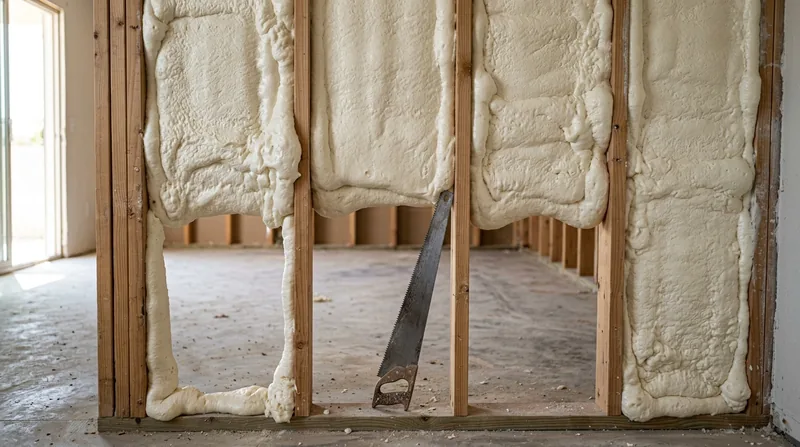




Open Cell Spray Foam Insulation in El Paso solves the heat-load problem that dominates every attic in the high desert. From May through September, El Paso attics hit 140 to 160 degrees Fahrenheit, and that heat drives air conditioning costs through the roof while half-pound open-cell foam air-seals attics and walls at a price that makes the upgrade reachable for most homeowners. The desert swings from 100-degree days to freezing winter nights, and the spring monsoon brings wind-driven dust into every unsealed attic. We spray open-cell where it belongs, explain where closed-cell makes more sense, and help El Paso homeowners and builders understand the difference before they commit. Learn more about attic spray foam insulation and how it pairs with air sealing to cut both heat loss and cooling load.
Why Open-Cell Spray Foam Matters in El Paso's Desert Climate
El Paso sits at nearly 4,000 feet in the high Chihuahuan Desert, where almost every home sits on a concrete slab with pitched roofs that trap brutal summer heat in the attic above. Brick, concrete block, and frame-and-stucco walls are the standard, and the ductwork for refrigerated air or rooftop swamp coolers runs through attics that become ovens from late spring through early fall. Open-cell foam at half-pound density air-seals the attic envelope, stops the convective heat loop, and comes with sound dampening between rooms as a bonus. The cost per board foot sits well below closed-cell, making it the right choice for most residential attics where moisture and condensation are not the driving failure mode.
- Stops air leakage through the attic floor, rim joists, and band joists where ductwork penetrates the envelope.
- Reduces the temperature differential between the attic and the conditioned space below, cutting cooling load by 15 to 40 percent in typical retrofit scenarios.
- Dampens sound transmission between rooms and from outside, a natural benefit of the open-cell structure.
- Works in pitched-roof attics where the attic itself is not conditioned, the most common configuration in El Paso residential stock.
These benefits add up to lower utility bills and more even temperatures throughout the home, and the entry cost is low enough that most El Paso homeowners see the payback within five to seven years.
Key info: Open-cell foam is air-permeable once cured, meaning moisture that enters the attic can exit back through the foam. This makes it ideal for El Paso's dry climate and for attics with existing roof vents or soffit vents that will remain open. In a sealed attic with no venting, closed-cell is the correct choice because it acts as a vapor barrier.
For more on the sealed versus vented attic debate and where closed-cell belongs, see our guide to closed-cell spray foam insulation.
How We Spray Open-Cell Foam in El Paso Attics and Walls
The work starts with a site visit and a walk of the attic or wall cavity. We measure the space, check for air leaks, moisture, and any existing insulation that needs removal, and we give you a written estimate with R-value and thickness specs before we spray a single board foot. Open-cell foam is sprayed in layers, typically 3 to 5 inches per pass, and each pass must cure before the next one begins. We control the spray temperature, maintain the correct mixture ratio from the spray rig, and run mechanical ventilation during cure to manage off-gassing. The job is not finished until the foam has cured to the manufacturer timeline, typically 24 to 48 hours, and you have a clear re-entry window.
- We inspect the attic floor, roof deck, and wall cavities for moisture, leaks, or contamination before any foam goes down.
- We remove existing insulation if it is degraded, compressed, or blocking the spray, and we haul it away so the substrate is clean.
- We spray the foam in controlled passes, allowing each layer to cure before adding the next, and we hit the specified R-value and thickness.
- We run continuous ventilation during cure and provide you a re-entry timeline so you know when the attic is safe to enter.
- We seal all air leaks around ductwork, electrical penetrations, and rim joists so the foam and the air sealing work together.
This methodical approach takes longer than a rig-and-run crew can afford, but it produces a durable, code-compliant install that will not smell or off-gas after you move back in.
Example: A 1950s brick ranch in the Northeast El Paso neighborhood with a flat-roof attic and 3 inches of compressed fiberglass gets a complete tear-out and a 5.5-inch open-cell spray to R-21. The existing ductwork is sealed where it penetrates the floor, the rim joist gets foam and caulk, and the whole job takes three days from prep to cure. The homeowner avoids re-entry for 48 hours, then the attic is ready for storage or HVAC work.
Open-Cell Spray Foam Insulation Methods and Applications
| Approach | Description | Best for |
|---|---|---|
| Attic floor spray | Half-pound open-cell sprayed directly on the attic floor joists and between joists to R-19 or R-21, with air sealing of rim joists, ductwork, and electrical penetrations. | Pitched-roof attics in El Paso with existing soffit or roof vents, the most common residential retrofit. |
| Wall cavity retrofit | Open-cell injected or sprayed into the wall cavities of frame-and-stucco homes without removing exterior or interior finishes, filling voids left by settling or missing fiberglass. | 1950s-1980s frame-and-stucco homes on the Westside and Far East side where exterior demolition is not an option. |
| Rim and band joist sealing | Open-cell foam sprayed into the rim joist cavity, followed by caulk and trim, to seal the gap where the rim board meets the foundation and the band joist meets the exterior wall. | Historic homes in Kern Place, Sunset Heights, and Manhattan Heights with raised floors and crawl spaces where air infiltration drives heating loss. |
| Garage and bonus room spray | Open-cell applied to the underside of the garage ceiling or bonus room roof deck to create a thermal break and reduce radiant heat gain from the roof. | Attached garages and bonus rooms in newer two-story homes on the Far East side and in Tierra del Este where roof exposure is high and conditioned space is above. |
Each application starts with a site-specific estimate and a clear explanation of why open-cell is the right choice for that space, or why closed-cell or another method would work better.
Open Cell Spray Foam Insulation Cost in El Paso: What to Expect
Open-cell spray foam insulation starts at $0.55 to $0.75 per board foot for a straightforward attic retrofit with minimal prep and good access. The price moves up with the size of the job, the complexity of the substrate, the amount of existing insulation that must be removed, and the distance from our shop. A typical attic retrofit in El Paso runs 2,000 to 4,000 board feet, which puts the material cost in the range of $1,100 to $3,000 before labor and equipment. Labor and setup add another 40 to 60 percent, so a full-attic job typically lands between $1,800 and $5,000 depending on size, access, and what has to come out first.
Wall cavity retrofit and rim joist sealing are smaller-ticket jobs, typically 200 to 800 board feet, and they run $150 to $800 in material plus labor. A garage ceiling spray is usually 400 to 1,200 board feet and costs $300 to $1,500 all-in. Every estimate is written with the R-value, thickness, and board-foot count spelled out so you know exactly what you are paying for. We always recommend getting two or three estimates from contractors who can show you their work and explain their process, because spray foam quality depends entirely on the crew and the equipment, not on the product alone. See our full pricing guide for more detail on what drives cost up or down.
Cost example: A 2,500-square-foot ranch in Horizon City with a 1,200-square-foot attic, 2 inches of old fiberglass, and good roof access gets a complete tear-out and 5.5-inch open-cell spray to R-21, plus rim joist and ductwork sealing. Material is roughly 3,000 board feet at $0.65/bf = $1,950, labor and equipment add $2,200, for a total of about $4,150. The homeowner gets a 25-year warranty on the foam itself and a three-year workmanship warranty on the installation.
What to Look for When Hiring a Spray Foam Insulation Contractor Near Me in El Paso
Spray foam insulation is not a licensed trade in Texas at the state level, but the City of El Paso and many surrounding municipalities do require contractor registration before work begins. Any contractor you hire should be able to show you proof of registration with the city where you live, proof of general liability insurance with a minimum of $1 million in coverage, and a written estimate with R-value, thickness, and board-foot count. Ask for references from jobs in your neighborhood, ask to see photos of completed work, and never accept a price estimate that comes without a site visit. The cheapest estimate is often a sign that corners are being cut: no mechanical ventilation during cure, no re-entry timeline, no written warranty, or equipment that is out of calibration.
- Verify that the contractor holds general liability insurance and can provide a certificate of insurance before work starts.
- Ask whether the contractor is registered with the City of El Paso or the city where your home is located, and confirm the registration directly with the city.
- Request a written estimate that includes the R-value, thickness in inches, and the total board feet of foam, not just a price per square foot.
- Ask about the spray rig, the foam supplier, and whether the crew has been trained by the manufacturer on the correct ratio and temperature.
- Confirm the re-entry timeline and ask whether mechanical ventilation will run during cure, and for how long.
- Get at least two or three estimates and compare the scope, not just the price, so you understand what each contractor is proposing to do.
The best spray foam contractor is the one who takes time to explain the work, answers your questions honestly, and is reachable after the job is done. Call us at (915) 213-7582 for a free estimate, or visit our contact page to request an inspection. We have been in business since 2012, we are fully insured, and we stand behind every job with a written warranty.
Open Cell Spray Foam Insulation in El Paso: Pricing Guide
| Service | Price | Details |
|---|---|---|
| Open-cell attic retrofit | Starting at $0.55/board ft | Material cost for half-pound open-cell foam; includes R-19 to R-21 in typical El Paso attics with good access and minimal prep |
| Wall cavity injection or spray | Starting at $0.65/board ft | Slightly higher than attic work due to equipment setup and access constraints in frame-and-stucco homes; includes sealing around electrical and plumbing |
| Rim joist and band joist sealing | Starting at $300 to $600 per job | Typical smaller-scope work in historic homes with raised floors; includes foam, caulk, trim, and air sealing of the rim cavity |
| Insulation removal and haul-away | From $0.15 to $0.35 per square foot | Required before most retrofits; cost depends on the type, depth, and condition of existing insulation and whether it contains asbestos |
| Full attic retrofit with removal | From $1,800 to $5,000 per job | Includes tear-out of existing insulation, prep, spray, curing, and air sealing; typical 1,500 to 4,000 board feet in El Paso residential stock |
| Free written estimate | No charge, no obligation | Response within 24 hours at (915) 213-7582; includes site visit, measurement, R-value and thickness specs, and a clear scope of work |
Indicative pricing, the exact cost depends on square footage, finish, and site access. Free personalized estimate within 24h at (915) 213-7582.


