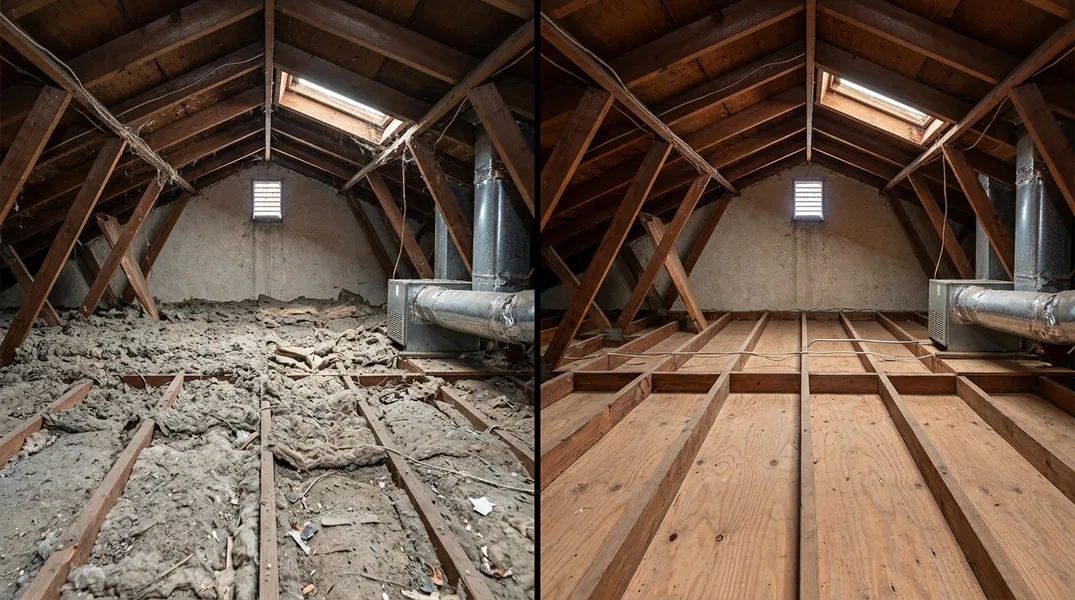
Understanding Open-Cell vs Closed-Cell Spray Foam
When you're evaluating insulation options for your Attic Spray Foam Insulation project, you'll quickly encounter two main types: open-cell and closed-cell spray foam. While both are sprayed in place and expand to fill cavities, they differ significantly in structure, performance, and application. Understanding these differences is crucial for making an informed decision about your home's energy efficiency and comfort.
Open-cell spray foam has a softer, more flexible structure because its cells are not completely sealed. This makes it lighter and easier to cut, but it also means it's more permeable to air and moisture. Closed-cell spray foam, by contrast, has fully encapsulated cells that create a denser, more rigid foam. This structural difference influences everything from installation to long-term performance, making it essential to understand which type aligns with your specific needs in El Paso's climate.
Open-Cell Spray Foam: Benefits and Limitations
Open Cell Spray Foam Insulation is often the more budget-friendly option, which is why many homeowners consider it first. The foam expands significantly during application, filling gaps and creating an excellent air seal despite its softer nature. One major advantage is that open-cell foam is semi-permeable, allowing moisture vapor to pass through it. This characteristic can be beneficial in certain climates where vapor management is important, and it also makes open-cell foam easier to work with during installation.
However, open-cell spray foam does have notable limitations. Its lower density means it provides less structural support and can compress over time under pressure. In terms of thermal performance, open-cell foam typically offers an R-value of approximately 3.6 per inch, which is lower than closed-cell alternatives. Additionally, because it's permeable, open-cell foam is not ideal for applications where moisture control is critical, such as crawl spaces or areas prone to water intrusion. For homeowners in El Paso dealing with occasional monsoon moisture, this consideration matters.
Closed-Cell Spray Foam: Superior Performance and Durability
Closed Cell Spray Foam Insulation represents the premium option in spray foam insulation. Because its cells are completely sealed, closed-cell foam creates a vapor barrier in addition to providing insulation. This dual functionality makes it exceptionally valuable for protecting your home from moisture infiltration, which is particularly relevant for attic applications where roof leaks or condensation can occur. The denser structure also provides added structural support, which some builders prefer for added rigidity to wall cavities and roof assemblies.
The closed cell spray foam r value typically ranges from 6.0 to 7.0 per inch, nearly double that of open-cell foam. This superior insulating capacity means you need less thickness to achieve your desired R-value, which can be advantageous in space-constrained attics. Closed-cell foam is also more resistant to air leakage and provides better sound dampening. The trade-off is cost: closed-cell foam generally costs more per board foot than open-cell, though the superior performance often justifies the investment for homeowners prioritizing maximum energy efficiency.
Spray Foam R-Value Comparison: What You Need to Know
Understanding spray foam r value is fundamental to choosing the right insulation. R-value measures thermal resistance, and higher numbers indicate better insulating power. Open-cell foam's R-value of roughly 3.6 per inch means that to achieve an R-30 rating (a common target for attics), you'd need approximately 8.3 inches of material. With closed-cell foam at 6.5 per inch, you'd only need about 4.6 inches to reach the same R-30 rating.
For attic insulation projects, this thickness difference can be significant. El Paso's hot summers and mild winters mean that adequate attic insulation is critical for keeping cooling costs manageable. If your attic has limited headroom or existing obstructions, closed-cell foam's superior R-value per inch might be the practical choice. Conversely, if space isn't a constraint and you're budget-conscious, open-cell foam can still deliver adequate performance. The key is determining what R-value your specific attic needs based on local climate recommendations and your energy goals.
Attic Spray Foam Insulation Cost in El Paso: What to Budget
Cost is always a consideration when planning an insulation upgrade. Open-cell spray foam typically costs between $0.50 and $1.00 per board foot, while closed-cell foam ranges from $1.50 to $2.50 per board foot or more. For a typical 1,500 square-foot attic, open-cell projects might run $1,500 to $3,000, whereas closed-cell work could range from $3,500 to $7,000 or higher, depending on depth and complexity. These are ballpark figures, and actual pricing varies based on your specific project requirements, accessibility, and local market conditions.
Beyond the material cost, consider the long-term return on investment. Closed-cell foam's superior R-value and moisture resistance often translate to lower energy bills and reduced risk of moisture-related damage. Many homeowners find that the initial premium cost is recovered through energy savings within 5 to 10 years. The best way to understand your actual investment is to request a free estimate from El Paso Spray Foam Insulation. We can assess your attic, discuss your budget and energy goals, and provide a detailed quote that helps you make an informed decision.
Which Type Is Right for Your El Paso Home?
Choosing between open-cell and closed-cell spray foam depends on several factors specific to your situation. If your primary concern is budget and your attic has adequate space, open-cell foam offers good value and acceptable performance for many homeowners. It's also a solid choice if your attic is already well-ventilated and moisture isn't a significant concern. However, if you want maximum energy efficiency, superior moisture protection, or if your attic space is limited, closed-cell foam is the stronger investment.
El Paso's desert climate presents unique considerations. Our intense summer heat demands robust insulation to minimize cooling load, and while winter temperatures are mild, adequate insulation still matters for year-round comfort. The occasional heavy rain or potential for roof leaks also suggests that closed-cell foam's vapor barrier properties could be valuable insurance. Ultimately, the right choice depends on your priorities, budget, and long-term plans for your home. The team at El Paso Spray Foam Insulation can walk you through these factors and recommend the best solution for your attic. Call us at (915) 213-7582 or request a free estimate to discuss your project in detail.
Looking for a professional spray foam insulation contractor in El Paso? El Paso Spray Foam Insulation responds fast for all your spray foam insulation needs.
Get a Free Quote