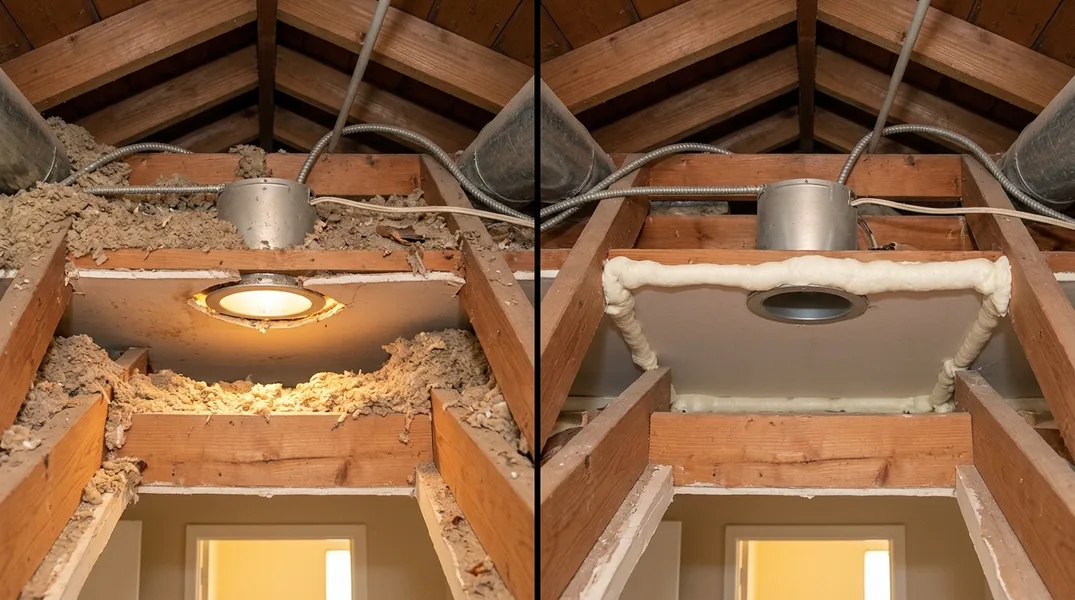
The Real Question Homeowners in El Paso Are Asking
When homeowners in El Paso start researching insulation upgrades, they often find themselves caught between two popular options: spray foam and blown-in insulation. The internet is full of articles declaring one superior to the other, but the truth is more nuanced. Your best choice depends entirely on what you already have, your budget, and what you're trying to accomplish.
At El Paso Spray Foam Insulation, we've inspected hundreds of attics across the region. What we've learned is that homeowners don't always need a complete overhaul. Sometimes the most honest recommendation is a strategic top-up rather than a full replacement. That might sound counterintuitive coming from a spray foam company, but it's the kind of advice that builds trust and delivers real value.
Spray Foam vs Blown-In Insulation: Understanding the Fundamental Differences
Attic Spray Foam Insulation and blown-in insulation work in fundamentally different ways. Blown-in insulation, whether cellulose, fiberglass, or mineral wool, is installed by blowing loose particles into your attic cavity. It settles over time and relies on depth and density to create an air barrier. The R-value per inch is typically lower, which means you need more thickness to achieve the same thermal resistance.
Spray foam, by contrast, expands to fill every crack, crevice, and gap as it cures. Closed Cell Spray Foam Insulation offers an R-value of roughly 6 to 7 per inch, while Open Cell Spray Foam Insulation delivers around 3.5 per inch. This density advantage means spray foam performs exceptionally well in tight spaces and provides superior air sealing. However, this also makes spray foam more expensive upfront.
Spray Foam vs Fiberglass: Why El Paso's Climate Matters
El Paso's desert climate creates unique insulation challenges. Summers are scorching, with temperatures regularly exceeding 95 degrees Fahrenheit. Winters are mild but can still dip below freezing on clear nights. This means your attic experiences dramatic temperature swings that put constant stress on your insulation system.
Fiberglass blown-in insulation is affordable and widely available, but it doesn't seal air leaks. Over time, especially in a climate as extreme as El Paso's, air infiltration around gaps, seams, and penetrations can significantly reduce its effectiveness. Fiberglass also settles, which means its R-value degrades over 5 to 10 years. Spray foam, by contrast, maintains its performance year after year because it creates a continuous thermal and air barrier that doesn't compress or settle.
Blown-In Insulation and Cellulose: When They Still Make Sense
Blown-in insulation isn't a bad choice, and in some situations, it remains the most practical option. If your attic already has decent insulation coverage and you simply need to boost your R-value, adding blown-in cellulose or fiberglass on top is cost-effective and straightforward. The installation is quick, and the disruption to your home is minimal.
Cellulose blown-in insulation deserves a special mention because it's made from recycled paper and offers good environmental credentials. It provides slightly better air sealing than fiberglass and has a comparable R-value per inch. However, cellulose can absorb moisture, which is a consideration in any climate but especially important to monitor in El Paso where monsoon rains can occur. The honest truth is that blown-in insulation works best when your attic is already reasonably well-sealed and you're simply adding depth to existing coverage.
The Best Insulation for Your Attic: It Depends on Your Starting Point
When we talk about the best insulation for attic spaces, we have to ask: best for what? Best at sealing air leaks? Spray foam wins decisively. Best for budget-conscious homeowners with existing coverage? Blown-in insulation. Best for new construction or complete attic renovations? Spray foam typically delivers superior long-term performance and energy savings.
The real answer is that your attic's current condition should drive the decision. If your attic has little to no insulation, or if it has significant air leaks, moisture problems, or structural gaps, spray foam is the investment that pays dividends. If you already have 6 to 8 inches of relatively intact blown-in insulation and just need to reach current building codes (typically R-38 to R-49 in El Paso), a strategic top-up of blown-in material might be the honest, cost-effective solution.
Attic Spray Foam Insulation Cost in El Paso: What to Budget
Cost is always a factor, and we respect that. Blown-in insulation typically costs between 0.50 and 1.50 dollars per square foot, making it the budget option for attic insulation. Spray foam runs between 1.50 and 3.50 dollars per square foot depending on whether you choose open or closed cell. For a typical 1,500 square foot attic, blown-in might cost 750 to 2,250 dollars, while spray foam could range from 2,250 to 5,250 dollars.
However, the comparison isn't just about installation cost. Spray foam delivers higher R-value per inch, requires less thickness, and maintains its performance for 20 to 30 years with virtually no degradation. Blown-in insulation may need supplemental coverage within 10 to 15 years as it settles. When you factor in energy savings, longevity, and the reduced likelihood of future air sealing issues, spray foam often delivers better value over the life of your home. To understand what your specific situation requires, reach out for a free estimate from El Paso Spray Foam Insulation at (915) 213-7582.
The Honest Recommendation: Sometimes a Top-Up Is the Right Answer
Here's what we've learned after years of serving homeowners throughout the region: not every attic needs a complete spray foam overhaul. If your attic already has decent insulation coverage but falls short of current energy codes, adding 3 to 4 inches of blown-in insulation on top can be the most cost-effective path to compliance. You'll improve your R-value, reduce energy bills, and stay within budget.
On the other hand, if your attic has gaps, air leaks, moisture issues, or inadequate existing coverage, spray foam is the investment that solves multiple problems at once. It seals, insulates, and protects in a single application. Whether you choose spray foam, blown-in insulation, or a hybrid approach, the key is making an informed decision based on your actual needs, not marketing hype. El Paso Spray Foam Insulation is here to give you honest guidance. Call us at (915) 213-7582 or visit our website to discuss your attic and get a clear recommendation tailored to your home.
Looking for a professional spray foam insulation contractor in El Paso? El Paso Spray Foam Insulation responds fast for all your spray foam insulation needs.
Get a Free Quote